 Remittance companies
 Crypto OTC desks
 Bitcoin ATM operators
 ATM operators
 Small businesses

On this page
The crypto ATM ban Canada proposed this spring is now a bill. Bill S-8 was introduced in the Senate on November 3, 2026. It would make it a criminal offence to operate a crypto ATM without a provincial licence.
As of November 2026, the bill has only passed first reading, so it is not law yet. If it passes, the ban would start 18 months after Royal Assent. That gives Bitcoin ATM operators time to plan, if they start now.
Below: what the bill says, what is still open, and how to keep Canadian dollars moving. To see how we work with operators, visit our page for Bitcoin ATM operators.
What is the proposed crypto ATM ban in Canada?
The idea first appeared in the federal Spring Economic Update 2026. It proposed making it a criminal offence to operate a crypto ATM. The change would go in the Proceeds of Crime (Money Laundering) and Terrorist Financing Act.
The bill that followed is narrower. According to Finance Canada, Bill S-8 targets crypto ATMs that are not licensed by a province or territory. Licensed machines could keep running, with stricter federal rules on top.
Finance Canada says crypto ATMs have become a main way for scammers to get cash from victims. It estimates Canadians lost $142 million to $284 million to fraud through these machines in 2024.
Who the crypto ATM ban would cover
The bill text reaches past the operator. As written at first reading, it would be an offence to knowingly:
- operate a crypto ATM
- provide the space where a machine sits
- load cash into a machine or collect cash from it
- sell software that runs crypto ATM transactions in Canada
There is an exception for each one. It applies when the operator holds a licence under a provincial law and the machine is in that province. That means your hosts and cash handlers are covered too, unless you hold a licence.
The penalties in the bill are steep. On summary conviction, the fine can reach $2,500,000, with up to 2 years less a day in prison. On indictment, the fine can reach $5,000,000, with up to 5 years in prison.
When would the crypto ATM ban start?
No one knows the exact date yet. Bill S-8 still has to pass the Senate and the House of Commons, then receive Royal Assent. You can follow each stage on LEGISinfo.
Once it passes, Finance Canada lays out 2 steps:
- 90 to 180 days after Royal Assent: new federal rules for crypto ATMs take effect. The bill would cap what one person can do at a machine at $1,000 in 24 hours.
- 18 months after Royal Assent: the ban on unlicensed crypto ATMs takes effect.
The 18-month gap is there so provinces and territories without a licensing system can build one.
What we still don't know
A lot is still open as of November 2026:
- The start date. It depends on when, or if, the bill gets Royal Assent.
- Provincial licences. It isn't clear which provinces and territories will create one, or what they will require.
- The new federal rules. Finance Canada calls them "enhanced federal regulatory requirements." The detail will come later, in regulations.
- Final wording. Bills can change in committee. What we quote here is the first reading text.
- Help for operators. Neither the bill nor Finance Canada mentions any transition support for operators who close.
Bitcoin ATM operators: what are your options?
You have 3 realistic paths, and you can mix them.
Apply for a provincial licence, if one exists
If your province creates a licence, you may be able to keep your machines running there. Expect the new $1,000 daily cap and tighter federal rules. Run the numbers on whether a machine still pays for its spot at that limit.
Wind down your machines
If a licence isn't coming, or the economics don't work, plan an orderly exit. Give your hosts notice under your agreements. Plan your last cash pickups. Tell customers where they can buy from you next.
Your own duties under the Act don't stop when a machine goes dark, so keep your records in order.
Move customers online and to OTC
Your customers already know and trust your brand. You can keep serving them online, and through an OTC desk for larger trades.
Finance Canada notes that Canadians would still be able to use the full services of money services businesses. Banks have rarely been keen on crypto businesses. So the hard part is taking Canadian dollars online.
Moving a crypto ATM Canada business online
Online, you need a quick way to collect and pay out Canadian dollars. Here is how that works with an Invincible Pay payment wallet.
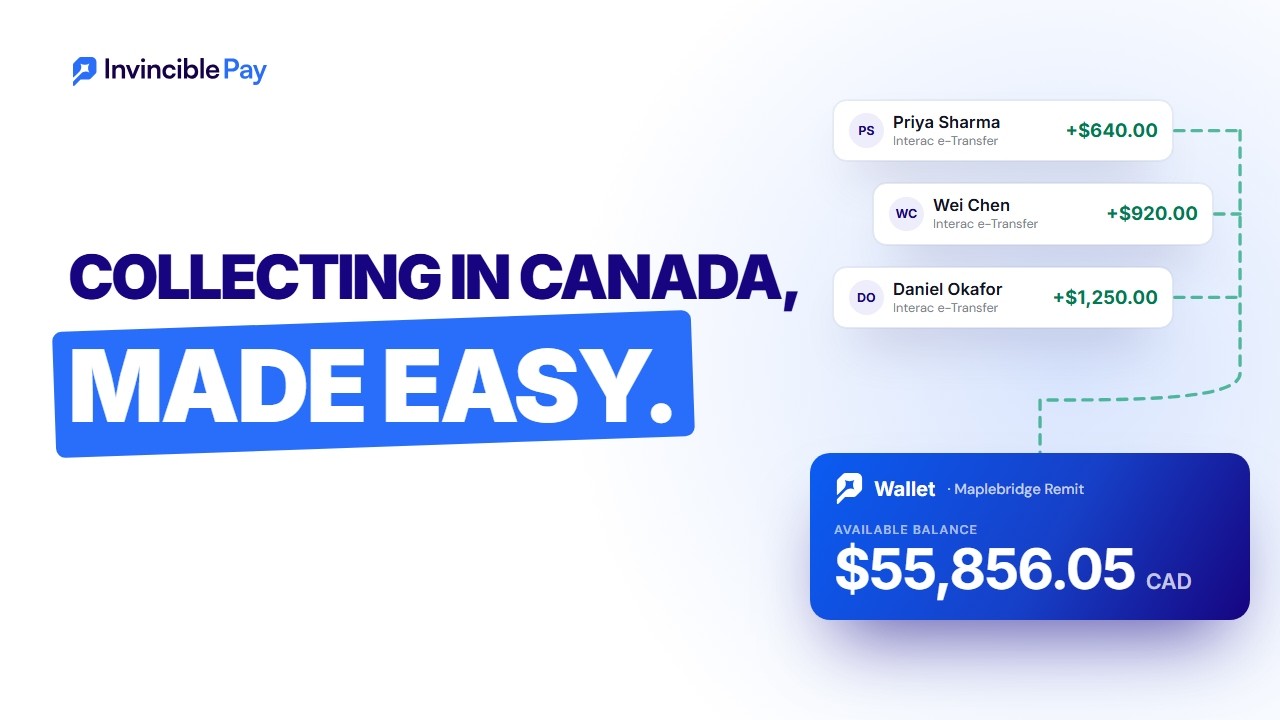
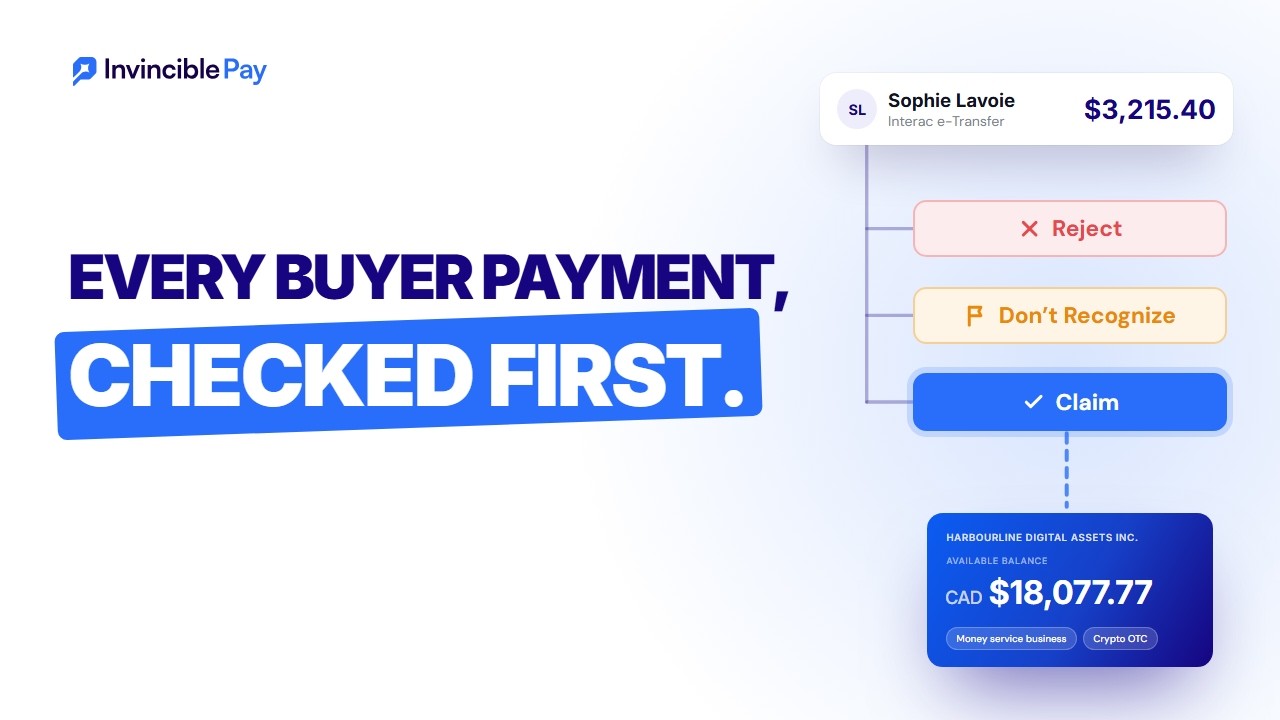
Taking payments when customers buy. Send Interac e-Transfer requests, or add e-Transfer checkout to your site. An e-Transfer usually arrives in minutes (up to 30). e-Transfer checkout payments land in your wallet with no holding period. Autodeposit means you don't have to accept each one by hand.
Your wallet receives without limits, but each customer is limited by their own bank. Most people can send about $3,000 to $5,000 a day by e-Transfer. That is still well above the $1,000 a day the bill would allow at a machine.
Larger OTC trades. Wires go in and out of your wallet the same day, inside Canada and in Canadian dollars. EFT and direct deposit typically take 1 business day.
Paying customers when they sell. You can send up to $25,000 per transfer, with no daily limit. Bulk e-Transfer lets you pay many customers in one go.
Moving funds into crypto. Our crypto on- and off-ramp is integrated with your wallet. It's a seamless way to move your Canadian dollars in and out of crypto. Our API with webhooks connects all of this to your app or trading platform.
We work only in Canadian dollars and only with Canadian businesses. Invincible Pay is registered with FINTRAC as a money services business (registration no. C100000702). We're also registered with the Bank of Canada as a payment service provider under the Retail Payment Activities Act. Your funds are safeguarded under the Retail Payment Activities Act: kept separate from our own money, in a dedicated account covered by insurance, as the Act requires.
Learn more on our crypto business page.
What to do next
Don't wait for Royal Assent to set up your online payments. Tell us about your crypto business and we'll reply within 24 hours on business days. Money services and high-risk businesses onboarded by January 7 get waived setup and monthly minimum fees.
Frequently asked questions
Is the crypto ATM ban law yet?
No. As of November 2026, Bill S-8 has only passed first reading in the Senate. It still needs to pass both the Senate and the House of Commons and receive Royal Assent. Even then, the ban on unlicensed machines would start 18 months later. Check LEGISinfo for the latest stage.
Can I still run a crypto ATM in Canada after the ban?
Only with a provincial licence. Under the bill as introduced, licensed operators are exempt. The machine must be in the province that issued the licence. Licensed machines would face stricter federal rules, including a $1,000 limit per person in 24 hours. Not every province has a licensing system yet.
What are the penalties under the crypto ATM ban?
Fines of up to $5,000,000 and up to 5 years in prison on indictment, under the bill as introduced. On summary conviction, the limits are a $2,500,000 fine and up to 2 years less a day. These amounts come from the first reading text and could change.
How much does Invincible Pay cost for a crypto business?
Transactions cost $1.95 + 0.20% each. Crypto accounts also pay a $500 one-time setup fee. There's a $500 monthly minimum, which counts toward transaction fees. For wires and the crypto ramp, reach out for pricing. See our pricing page for details.
How long does it take to start taking payments?
Usually within 5 business days once we have your documents. You can apply in about 20 minutes. Approval usually takes 3 business days after that.
Can my customers pay by Interac e-Transfer instead of a crypto ATM?
Yes. You can send Interac e-Transfer requests or add e-Transfer checkout to your site. Payments usually arrive in minutes. Each customer's daily limit is set by their own bank. Most people can send about $3,000 to $5,000 a day.