 Remittance companies
 Crypto OTC desks
 Bitcoin ATM operators
 ATM operators
 Small businesses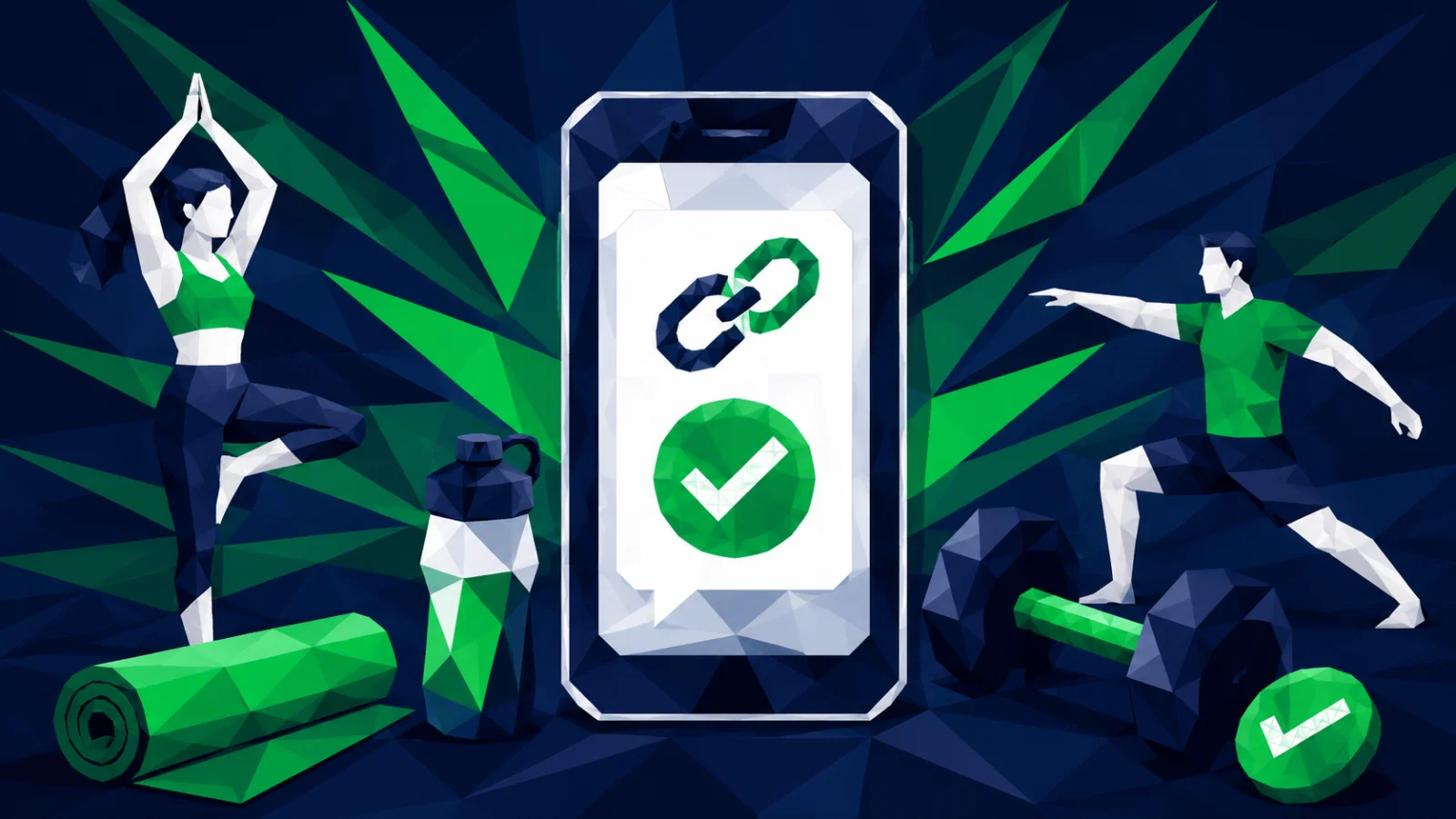
On this page
- Why Is Getting Paid So Difficult for Fitness and Wellness Professionals?
- What Billing Models Work Best for Fitness Professionals?
- How Do Payment Links Make Collection Easier?
- How Can Prepayment Reduce No-Shows and Cancellations?
- How Should Wellness Professionals Handle Tax Season?
- What Should You Look for in a Payment Platform?
- How Do You Communicate Payment Terms to Clients?
- Ready to Stop Chasing Payments?
- Frequently Asked Questions
Fitness trainers, yoga instructors, and wellness professionals can simplify payment collection by using payment links, prepaid session packages, and digital wallets instead of chasing clients for cash or e-Transfers after every session. The right payment setup reduces no-shows, speeds up cash flow, and lets you focus on coaching instead of accounting.
If you are a personal trainer, nutritionist, or yoga instructor in Canada, you already know the real challenge is not building a client base. It is getting paid consistently, on time, and without awkward conversations. Whether you are running one-on-one sessions, group classes, or online coaching, the way you collect money can make or break your business.
Canada's fitness and recreational sports industry generated $5.8 billion in operating revenue in 2024, with steady growth projected through 2026. Personal training businesses alone have grown at a rate of nearly 5% per year since 2016, with over 728,000 personal training businesses now operating globally. The demand is clearly there. But the payment infrastructure most fitness pros rely on has not kept up.
This guide breaks down the most common payment headaches for wellness professionals, explains the billing models that actually work, and shows you how tools like payment links and digital wallets can eliminate the friction between finishing a session and getting paid.
Why Is Getting Paid So Difficult for Fitness and Wellness Professionals?
Unlike salaried employees, fitness professionals deal with unpredictable income. Clients cancel last minute, forget to pay after a session, or push payments to "next time." Meanwhile, the tools most trainers rely on were designed for retail stores or large corporations, not for someone running a solo personal training business out of three different gyms.
Here are the most common payment problems wellness pros face in Canada.
Chasing Payments After Sessions
Many trainers still operate on a "pay after the session" model, which means they are constantly reminding clients to send an e-Transfer, bring cash, or pay through an app. This takes time and creates tension. You did not get into fitness to become a debt collector!
Research suggests that personal trainers who rely on manual payment collection spend 8 to 12 hours per month on payment-related admin. That is nearly two full working days every month that could be spent training clients, marketing your services, or just recovering.
Late Cancellations and No-Shows
Late cancellations are one of the biggest revenue killers for personal trainers and wellness professionals. When a client cancels with an hour's notice (or just does not show up), that time slot is gone. You cannot resell it. And if you did not collect payment upfront, you absorb the entire loss.
Scheduling platforms that require deposits or prepayment have been shown to reduce no-shows by up to 30%, according to industry data from 2025. But many trainers are still not using them, either because the tools feel complicated or because they worry about scaring off clients.
Juggling Multiple Payment Platforms
One client pays by cash. Another sends an Interac e-Transfer. A third uses PayPal. And someone else pays through your scheduling app. Come tax time, you are trying to match transactions across four different platforms, three bank accounts, and a folder of screenshots. It is messy, error-prone, and stressful.
High Processing Fees Eating Into Margins
Credit card processors typically charge 2.5% to 3.5% per transaction. For a trainer charging $80 per session, that is $2 to $3 lost on every single appointment. Over a year, those fees can easily add up to thousands of dollars, especially if you are also paying monthly fees for your booking software, website, and other tools.
For wellness professionals operating on tight margins, those percentages matter. Finding a lower-cost payment method is not just nice to have. It directly affects your take-home income.
What Billing Models Work Best for Fitness Professionals?
There is no single right way to bill clients. The best model depends on your service type, your client base, and how you prefer to manage your schedule. Here are the most common approaches, along with the pros and cons of each.
Per-Session Billing
This is the simplest model. The client pays for each session individually, either before or after the appointment. It works well for new clients who are not ready to commit to a package, or for services like massage therapy and nutritional consultations where frequency varies.
The downside is that it creates the most friction. Every session requires a payment conversation or transaction, and there is nothing preventing clients from disappearing without paying.
Session Packages (5-Pack, 10-Pack, 20-Pack)
Selling sessions in bundles is one of the most effective strategies for fitness professionals. Clients pay upfront for a block of sessions (for example, 10 personal training sessions for $750), which gives you guaranteed revenue and encourages them to stay committed.
Packages also reduce your admin work significantly. Instead of processing a payment every session, you handle one transaction and then track session credits. Many trainers offer a small discount on packages compared to single-session pricing, which incentivizes the larger purchase while still protecting your hourly rate.
Monthly Memberships and Subscriptions
Subscription billing is growing fast in the fitness world, especially for online coaching, group classes, and hybrid models that combine in-person sessions with app-based programming. Clients pay a fixed monthly fee (typically $99 to $299 for personal training) and get access to a defined set of services.
The biggest advantage here is predictable, recurring revenue. When you know that 20 clients are paying $149 per month on the first of every month, you can plan your finances, invest in marketing, and grow with confidence. The global market for online personal training is expected to reach $12.5 billion by 2026, and much of that growth is driven by subscription models.
Class Passes and Drop-In Rates
For yoga instructors, Pilates teachers, and group fitness leaders, class passes are a popular option. Clients buy a pass for a set number of classes (for example, 8 classes for $120) and attend on their own schedule.
This model works well because it offers flexibility while still collecting payment in advance. It also helps fill classes more consistently since clients who have already paid are more motivated to show up.
How Do Payment Links Make Collection Easier?
Payment links are one of the simplest and most effective tools available for wellness professionals who want to stop chasing money. A payment link is a URL that you generate through your payment provider and send to your client via text, email, DM, or any messaging platform. The client clicks the link, completes the payment, and the money lands in your account.
No app download required on the client's side. No clunky invoicing software. No waiting for cheques to clear.
Why Payment Links Work So Well for Trainers
Think about the typical flow after you book a new client. You confirm the session, maybe send a welcome email, and then... you need to figure out how to actually get paid. With payment links, you generate a link for the exact amount (say, $750 for a 10-session package), drop it into the confirmation message, and the client pays before the first session even happens.
This does a few powerful things at once. It eliminates the awkward money conversation. It secures your revenue before you deliver the service. And it dramatically reduces no-shows, because clients who have already paid are far more likely to actually attend.
Research from payment platform Sentoo suggests that invoices sent with digital payment links are paid up to three times faster on average compared to traditional invoicing methods. For fitness professionals who have been waiting days or weeks for an e-Transfer, that is a significant improvement.
Where to Send Payment Links
Payment links are flexible by design. You can include them in booking confirmation emails, text messages after an inquiry, direct messages on Instagram (where nearly 50% of personal trainers market their services), your website, or even printed on a QR code at your studio or gym.
The point is to meet your client where they already are. If someone DMs you on Instagram asking about personal training, you can reply with your rates and a payment link in the same message. No friction, no back and forth.
How Can Prepayment Reduce No-Shows and Cancellations?
Late cancellations and no-shows are not just annoying. They are a direct hit to your income. If you charge $100 per session and have two no-shows per week, that is roughly $10,000 in lost revenue per year.
Prepayment is the single most effective strategy for reducing this problem. Here is why it works, along with a few practical ways to implement it.
Require Deposits for First-Time Clients
Asking new clients to pay a deposit (typically 50% of the session fee or a flat booking fee) before their first appointment does two things. It filters out people who are not serious, and it gives the client skin in the game. When someone has already paid $50 toward a $100 session, they are far less likely to skip.
You can send a payment link for the deposit amount right when the client books. The remaining balance can be collected at the session or through another link afterward.
Sell Packages Instead of Single Sessions
As mentioned earlier, packages are inherently a prepayment model. When a client buys a 10-session package, they have already committed financially. This eliminates the no-show risk for every session in that block.
If you are worried about clients hesitating to pay upfront, offer a starter package of 3 or 5 sessions at a slightly reduced rate. This lowers the barrier to entry while still securing advance payment.
Set a Clear Cancellation Policy (and Enforce It)
A cancellation policy only works if clients know about it before they book, and if you actually enforce it. Clearly communicate that cancellations within 24 hours will be charged in full (or that the session credit will be deducted from their package).
When payment is already collected, enforcement is automatic. There is no uncomfortable conversation about whether to charge a no-show fee. The money is already in your account, and the session credit is simply marked as used.
How Should Wellness Professionals Handle Tax Season?
Getting paid is only half the equation. Tracking your income properly throughout the year saves you from a stressful (and potentially expensive) tax season.
Keep Business and Personal Income Separate
Open a dedicated business bank account and route all client payments through it. You do not need an LLC or corporation to do this. You can open a separate chequing account in your own name and use it exclusively for business income and expenses. This makes it dramatically easier to track revenue, claim deductions, and file your taxes.
Use a Single Dashboard Whenever Possible
One of the biggest time sinks for wellness professionals is trying to reconcile income from multiple platforms. If you are collecting payments through cash, e-Transfer, PayPal, and a booking app, that is four different sets of records you need to match at year-end.
Consolidating your payments through a single platform (like a digital wallet with built-in transaction tracking) eliminates this headache. Every payment is logged with the date, amount, and sender, all in one place. When your accountant asks for your records, you export a single report instead of assembling a spreadsheet from scratch.
Invincible Pay's Invincible Wallet, for example, logs every transaction with full details and gives you a clean, organized dashboard that makes year-end reporting significantly easier for freelancers and independent professionals.
What Should You Look for in a Payment Platform?
Not all payment platforms are built the same, and most of the big names were designed for retail or e-commerce, not for independent service providers. Here is what to prioritize when choosing a payment solution for your fitness or wellness business.
Low Transaction Fees
Credit card processing at 2.9% plus a flat fee per transaction is the industry standard, but it does not have to be your standard. Interac e-Transfer based payment platforms offer significantly lower fees because they bypass the traditional card networks entirely. Over the course of a year, the savings can be substantial.
Fast Settlement Times
Getting paid in 3 to 5 business days is not good enough when you have rent, equipment costs, and continuing education to pay for. Look for a platform that settles payments in minutes, not days. Interac e-Transfer payments through platforms like Invincible Pay typically arrive in your wallet almost immediately.
Payment Links You Can Share Anywhere
Your payment tool should let you generate shareable links that you can paste into a text, email, DM, or invoice. The client clicks, pays via Interac e-Transfer, and the money arrives. No app download needed on their end, no complicated checkout forms.
No Monthly Fees or Minimums
Many fitness professionals are just starting out or operating part-time alongside another job. Monthly platform fees of $30 to $100 are hard to justify when you are training 10 to 15 clients per week. Choose a platform with no monthly fees and low per-transaction costs so your expenses scale with your business, not ahead of it.
Clean Transaction Records
As discussed in the tax section, having organized records saves hours of admin time. A good payment platform should automatically log every payment with the date, amount, sender, and reference details. Bonus points if you can export the data for your accountant.
Invincible Pay checks all of these boxes for Canadian fitness and wellness professionals. It is a FINTRAC-registered, Bank of Canada-regulated payment platform that offers Interac e-Transfer up to $25,000 per transaction, shareable payment links, no monthly fees, and a clean transaction dashboard. You can open an Invincible Wallet in minutes and start accepting payments the same day.
How Do You Communicate Payment Terms to Clients?
One of the most underrated aspects of getting paid is simply setting expectations from the start. Many trainers avoid talking about money because it feels uncomfortable, but unclear payment terms are one of the top reasons for late payments and disputes.
Put It in Writing
Before a client books their first session, send them a short, clear summary of your payment terms. This should cover your rates, package options, accepted payment methods, cancellation policy, and when payment is due. You do not need a formal contract for most situations (although one is helpful for larger packages), but a written summary in an email or booking confirmation sets professional expectations.
Make Paying Easy
The easier you make it for clients to pay, the faster they will pay. If your payment process involves downloading an app, creating an account, or navigating a complicated checkout flow, you are adding friction that slows everything down.
This is where payment links shine. You send a link, they click it, and they pay using a method they already have (like Interac e-Transfer, which every Canadian with a bank account can access). That is it.
Automate Where You Can
If you are running a subscription or membership model, set up automatic billing so clients are charged on the same day each month without any manual intervention. This removes the need for monthly reminders and ensures consistent cash flow.
For package-based billing, send the payment link once when the client purchases the package, and then track session credits internally. The less often you need to request payment, the less friction there is in the relationship.
Ready to Stop Chasing Payments?
The fitness and wellness industry is growing, and the professionals who succeed are the ones who treat their business like a business. That starts with how you get paid.
Stop relying on cash, awkward post-session e-Transfer requests, and a patchwork of apps that do not talk to each other. Set up a system that collects payment upfront, tracks everything in one place, and lets you focus on what you actually love doing: helping people get healthier and stronger.
Open your Invincible Wallet in minutes, send your first payment link, and get back to the work that matters.
Get Your Free Invincible Wallet
Frequently Asked Questions
What is the best way for personal trainers to collect payments in Canada?
The most efficient approach is to use a digital wallet with payment link capabilities. You generate a link for the session or package amount, send it to your client via text or email, and they pay through Interac e-Transfer. The money arrives in your wallet in minutes, with no processing delays and lower fees than credit card processors. Platforms like Invincible Pay are built specifically for Canadian freelancers and service providers and offer this functionality with no monthly fees.
How can I reduce no-shows as a fitness professional?
Prepayment is the most effective strategy. Require clients to pay for sessions or packages in advance, either through a payment link or a deposit at the time of booking. Clients who have already paid are significantly more likely to attend. Combine this with a clear cancellation policy (for example, 24-hour notice required for a full refund) to protect your time and income.
Are payment links secure for collecting fitness session payments?
Yes. Payment links from regulated providers direct clients to encrypted payment gateways. When using Interac e-Transfer based payment links (like those offered through Invincible Pay), clients pay through their own bank's secure system. There are no card numbers to enter and no sensitive data to store.
How do session packages help wellness professionals with cash flow?
Session packages collect revenue upfront, which gives you a more predictable income stream. Instead of receiving $80 per session unpredictably throughout the month, you might receive $750 for a 10-session package on day one. This lets you cover expenses, invest in your business, and plan ahead with confidence. Packages also reduce admin work since you process one payment instead of ten.
What payment methods should I offer my fitness clients?
In Canada, Interac e-Transfer is the most widely accessible option since every client with a bank account can use it. It is also faster and cheaper than credit card processing. Offering payment links that accept e-Transfer gives your clients a convenient, familiar way to pay while keeping your costs low. You can supplement with cash for in-person sessions if needed, but consolidating through a single digital platform makes tracking and tax reporting much simpler.